World War II represents one of the most chaotic periods in recorded human history, yet it is also a time when the U.S. dollar established itself as the clear dominant currency. The following section will be an analysis into the context which granted such power to a single currency.
As Europe descended into chaos, capital once again fled the continent and funneled into the ridiculously immense reserves of the U.S. The Neutrality Act of 1937 and 1939 further inflated these reserves by making it so that any trade with the United States would require payment upfront in cash, banning any loans or credit payments. To clarify, the Acts were not America taking advantage of the war, but rather its attempt at aiding the Allies while remaining neutral, for the only countries that possessed enough hard money to accommodate such terms were the U.K., France, and several other non-Axis European nations. As evident in Table 2, Germany’s reserves had essentially vanished between 1929 and 1934 due to America’s recalling its generous loans from the Dawes and Young Plans. Both Italy and Japan suffered heavily from the Great Depression, and with their abandonment of the gold standard, their reserves had dropped sharply. Once more, as the world was busy fighting itself, America stayed relatively impartial, at least for the moment, and profited immensely. The Treasury grew its reserves by almost 50% between 1938 and 1941, standing at a staggering $22 736.6 million by December of 1941, all the while the second largest reserve, belonging to France, held around $1 999.9 million. Alas, neutrality did not last for long, as the attack on Pearl Harbor on December 7, 1941, officially brought the U.S. into the war as part of the Allies.
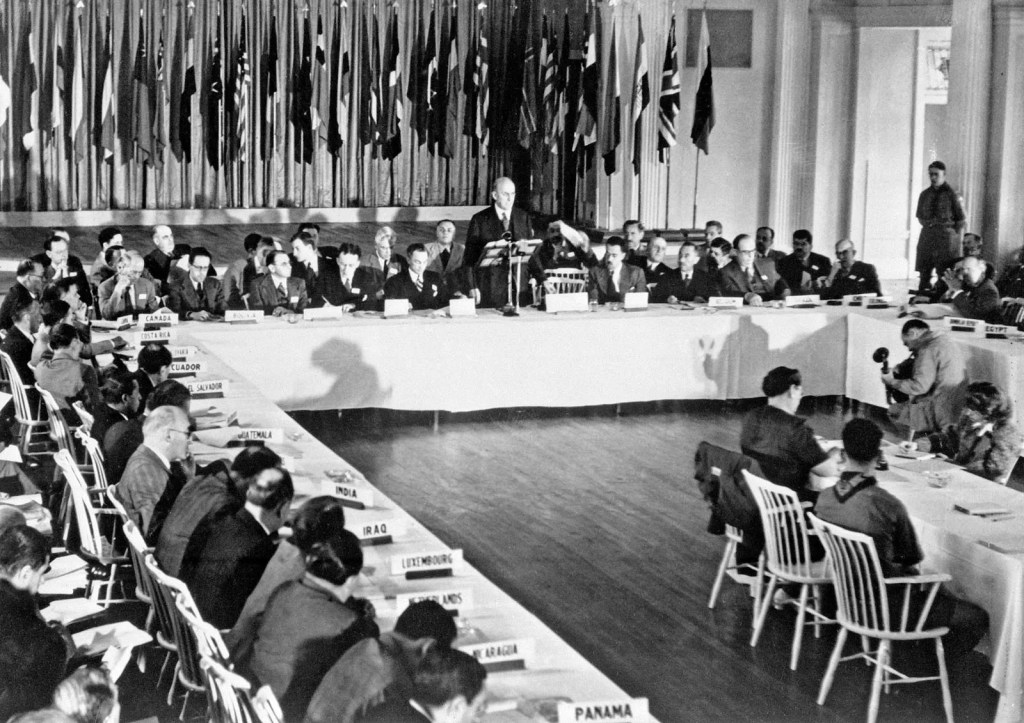
In 1944, one of the most significant events in global financial history would occur as 44 countries, including the U.S., signed the Bretton Woods Agreement. The reason for its importance is simple: it created the International Monetary Fund (IMF), the World Bank, and established a system where currencies would be pegged against the dollar. While the IMF and the World Bank are usually considered the lasting legacy of the agreement, the effects of the Bretton Woods conversion system still endure to this day despite its discontinuation in 1971. The Agreement was mainly contained within Article IV of the Articles that created the IMF. To summarise the content of the Agreement regarding parity of currencies (the procedure for which the initial parity is decided is not included):
(Section 1) Currencies must be expressed in either a specified weight of gold or the equivalent in terms of U.S. dollars
(Section 3) The exchange rates used for domestic transactions were not allowed to exceed one percent, unless it is explicitly allowed by the IMF.
(Section 5) The IMF has a say whenever a country decides to adjust its exchange rates, except for when the change is smaller than 10% or if the change is necessary to “correct a fundamental disequilibrium.”
(Section 6) In the case of an unauthorized change, the right to use the Fund’s resources will be revoked. If the issue persists, the country’s membership in the Fund is terminated.
(Section 7) A uniform change across all currencies is allowed with the corresponding members’ permission.
(Section 9) A change in a nation’s currency international par has the same effect for all of its territories’ currencies.
The entirety of Article IV was aimed at protecting the FX market. Any medium to large change must be approved by the IMF, discouraging competitive devaluation between governments. Moreover, it prevented events like the dollar’s sudden 41% devaluation after the Gold Reserve Act from occurring. While the change was deemed necessary due to the circumstances, foreign governments and investors did not approve of the fact that it also reduced the value of any U.S. asset by nearly half. Currencies were no longer floating freely, similar to how they were right after the abolishment of the gold standard, yet they were also not as rigid as if the gold standard were fully restored. In addition, Section 5 included a small yet vital note at the end, in that “[The IMF] shall not object to a proposed change because of the domestic social or political policies of the member proposing the change” (International Monetary Fund, 1944). Essentially, it meant that the IMF shall not take any political opinion and must view changes purely from an economic basis, no matter how questionable a country’s policy may be (unless those policies directly affect the economy). All these clauses combined created an impressively comprehensive set of regulations for the time that provided the Fund with enough influence while not overstepping any national boundaries.
What is important is that while the Agreement did curb deflation and restore confidence in currencies, it had the (possibly) unintended effect of elevating the U.S. dollar into becoming the entire world’s currency. One does not have to look closely to realize that the Bretton Woods Agreement had not so subtly replaced the gold standard with a new “dollar-gold standard.” Since the dollar was the only currency that still allowed for direct convertibility to gold (for central banks and governments only), holding the dollar was effectively the same as holding gold. Of course, trust in the dollar still relied on the fact that the U.S. government could maintain the ability to exchange the dollar for solid gold, but then again, America alone held around 55% of the global gold reserves by 1945, rendering any doubt largely inconsequential. It may have been expected that since the gold parity was restored, most governments would prefer to tie their currencies directly to gold rather than the dollar. However, gold had slowly been losing its place in national reserves ever since 1936, with foreign currencies taking its place, and by positing the dollar as an equivalent to gold, Bretton Woods turned the dollar into the preferred reserve currency for central banks around the globe. Moreover, it did not hurt that the U.S. had more gold than the rest of the world combined and that its GDP was larger than the entirety of Western Europe’s by 1950.
In comparison to the dollar’s rapid rise, the pound was once again in a precarious position, for the War had not been kind to Great Britain in the slightest. For the entirety of the six-year-war, Britain stood at the forefront of the Western European battlefield. If not for its pivotal role, Europe might have fallen to fascism early in the war, and an Allied defeat would have been far more plausible. Unfortunately, that victory did not come without a cost. Britain lost nearly half a million lives in total and spent 18.6% of its entire national wealth to finance the war. The colonial system became increasingly unstable as territories fought against British rule, and once India and Pakistan gained independence in 1947, any hope of reclaiming the Empire’s former glory vanished entirely.
Given how exhausted Britain was, it could not justify the $4.03 to £1 exchange rate. This time, the issue could not be resolved by simply waiting until the nation recovered as it had after the First World War, nor could it be solved by taking the pound off the Bretton Woods system. Only one solution remained: to devalue the pound.
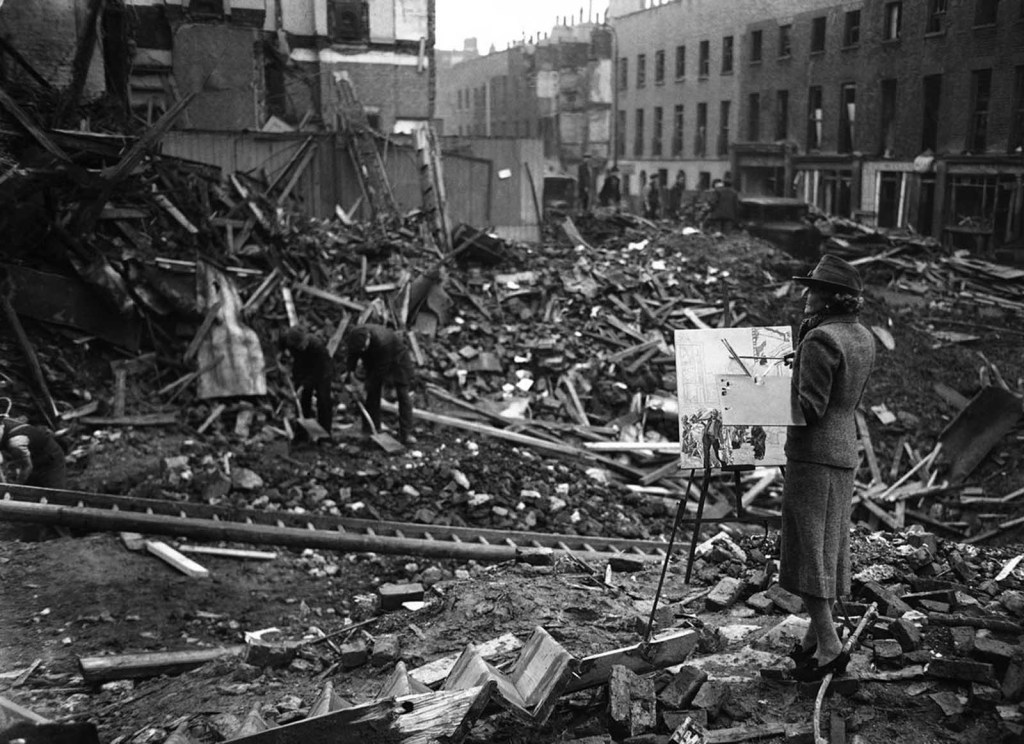
Sections 5 and 6 of Article IV of the Agreement were implemented due to concerns that countries would take advantage of a non-regulated monetary system to freely adjust their exchange rates. That fear was later proven to be mostly unnecessary, as since production was still recovering, a weaker currency would not have contributed much to exports, nor would it have reduced imports since those were still limited in quantity. As a result, most nations remained conservative and chose to stay with the fixed rate from the Bretton Woods Agreement, while only five countries (Italy, Peru, France, Mexico, Colombia) and one French colony (French Somaliland) adjusted their par by mid-1949. Nevertheless, the par could not stay as it was, else it risks Britain falling into further bankruptcy as the trade deficit widens, and thus on September 17, 1949, members of the IMF collectively agreed to devalue the pound from $4.03 per to $2.80. The 30.5% decrease in the pound’s value triggered a series of devaluations around the world, primarily from countries in the “sterling area,” a collection of nations that pegged their currency against the pound since 1931.
Sources:
Unfortunately, I forgot to document the sources for this specific section, and so cannot find all that I used to fully write it (it’s been a while). Nevertheless, I do remember using the full IMF Agreement for the first part, and an IMF document (perhaps IMF History Vol. 2) for the devaluation part.
 Currency Cornucopia