“david v. goliath”
Before the U.S. dollar, there existed another currency that dominated the global economy. The British pound sterling (£) was, without doubt, the most dominant currency of the 19th century thanks to the size and dominance of the British Empire. However, by the mid-twentieth century, the dollar had completely dethroned the pound as the de facto global reserve currency. The following section will examine how such a change occured.
Table 1:
Gross Domestic Product Levels (million 1990 international $) of the Top 5 Largest National Economies as well as the British Empire (1820-1913)
| 1820 | 1850 | 1913 | |
| “British Empire” | 148 550 | 250 694 | 533 090 |
| United States | 12 548 | 98 374 | 517 383 |
| China | 228 600 | 189 740 | 241 344 |
| Germany | 26 349 | 71 429 | 237 332 |
| United Kingdom | 36 232 | 100 179 | 224 618 |
| France | 38 434 | 72 100 | 144 489 |
Between the mid-to-late 19th century, Britain possessed the greatest economic output compared to any other state when all of its colonies, territories, dominions, and protectorates across Asia, Africa, North America, and Oceania are accounted for. The Empire’s population totaled 413 million, approximately 23% of the world’s population at the time, and its security was bolstered by its unrivaled naval capabilities as well as a myriad of military bases in Gibraltar, Malta, Cyprus, Egypt, the Suez Canal, Aden, and Hong Kong. While most of the countries, notably France, did hold many territories across the world, none could match the reach or wealth of the British Empire, an empire that at its height is often hailed as the largest in human history. It should also be mentioned that, despite France appearing among the largest economies, its national GDP was actually eclipsed by India, a British colony at the time, across all three years.
By that account, the pound sterling was unsurprisingly the most dominant currency at the time. The immense number of colonies under British rule meant that the pound was often the most popular currency, and in certain cases, the only currency available. The pound’s dominance was also partly due to early adoption of the gold standard by Britain and its territories, as in 1717, they became the first sovereign state to adopt a de facto gold standard due to Sir Isaac Newton setting the exchange rate between gold and silver too low, pushing silver out of circulation. The change bolstered confidence in the currency, and with the Empire being the leading economic power of the 19th century, the pound became desirable not only within British borders but internationally as well. The United States, as well as China, despite their impressive domestic economues, were not able to exert the same level of influence on international trade as European colonial powers such as France and the U.K.
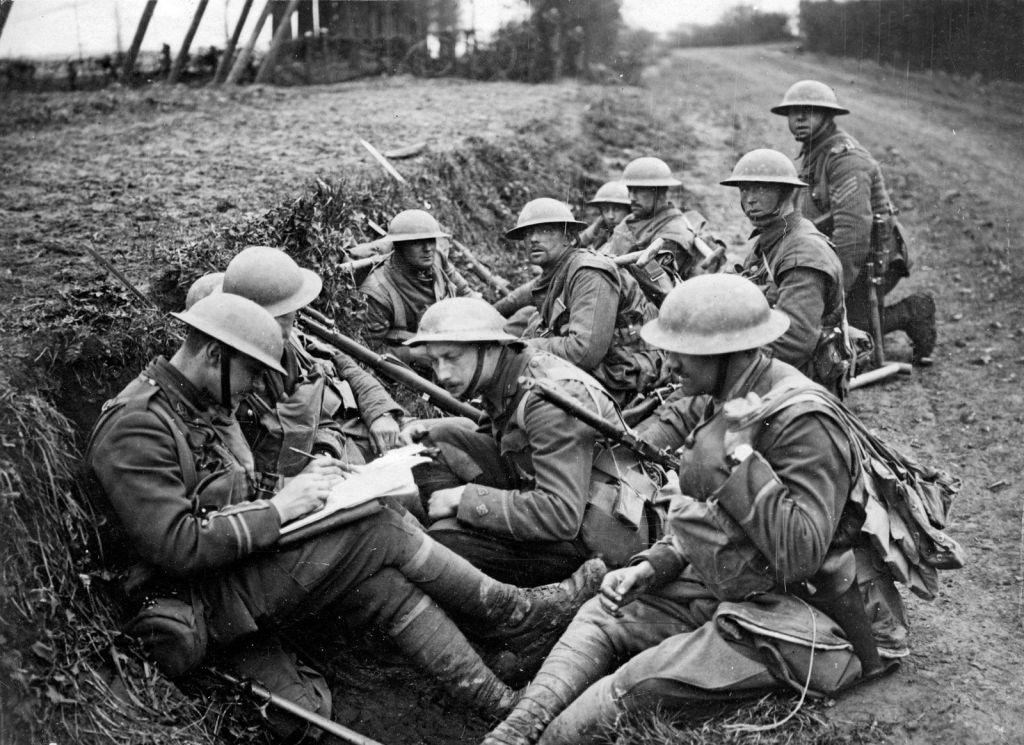
However, World War I not only massively augmented the economy of the U.S., an economy that was already growing at a remarkable pace in the 19th century, but also granted it new leverage through its continuous wartime lending to Europe. At the same time, Europe itself suffered severe economic and structural damage from the war, leaving many countries, most notably Germany, France, and Britain, and by extension their colonies, drastically weakened in its aftermath.
By the war’s conclusion in 1918, the United States had become the world’s largest creditor, lending money to many countries across the globe. Between 1914 and 1919, total exports tripled from less than $2.4 billion to over $7.2 billion, and the country had lent war munitions totaling over $9.5 billion on nothing but unsecured credit. Ongoing loans to allied countries and an increase in demand for American exports all around the world propelled the United States into a leading economic power. New York had grown into a financial center capable of rivaling London in scale and influence, deepening global dependence on the United States. The nation’s rapid growth helped solidify the dollar’s position as a trusted currency around the world, putting it in direct competition against the British pound sterling.
While the United States was going through one of the most remarkable periods of economic growth in recorded history, Britain, and thus its territories, was being ravaged by the needs of the war. Weapons, ammunition, food, transportation, and other finances strained the British economy, forcing it to continuously take out loans from its allies. Fisk, an American banker at the time, wrote the following:
“Thus “the mantle of Elijah fell upon Elisha.” That is to say, Mother England ceased to be the foreign banker for the Allies and her lusty descendant, the United States of America, took her place. It is true that during the second part of the war up to the close of March 31, 1920, Great Britain lent $4,176,000,000, but she borrowed abroad $4,498,000,000.“
The aftermath of the war had seen the transition of Great Britain from the greatest creditor in the world into one of its net debtors. Its generosity also spelled its downfall, for the loans it extended to its allies mounted further pressure on its already strained economy.
Table 2:
12 Major National Gold Reserves (million 1941 $) between 1914-1941
| Dec 1914 | Dec 1919 | Dec 1924 | Dec 1929 | Dec 1934 | Dec 1938 | Dec 1941 | |
| United States | 1 206.5 | 2 517.7 | 4 090.1 | 3 900.2 | 8 238.0* | 14 511.6 | 22 736.6 |
| Argentina | 241.5 | 336.7 | 443.9 | 433.9 | 403.4* | 431.2 | 354.0 |
| Belgium | 51.0 | 51.4 | 52.5 | 163.4 | 646.2* | 581.0 | 734.1 |
| France | 802.6 | 694.8 | 710.4 | 1 633.4 | 5 444.8* | 2 430.3 | 1 999.9 |
| Germany | 498.5 | 259.5 | 180.9 | 543.8 | 31.9* | 28.5 | 28.5** |
| Italy | 270.6 | 200.4 | 221.0 | 273.0 | 517.8* | 193.3 | ———— |
| Japan | 64.1 | 350.0 | 585.7 | 542.5 | 393.6* | 163.6** | ———— |
| Netherlands | 84.0 | 257.1 | 203.6 | 180.5 | 575.1* | 998.0 | 574.6 |
| Spain | 110.6 | 471.5 | 489.2 | 495.1 | 740.1* | ———— | 42.2 |
| Switzerland | 46.1 | 100.2 | 98.0 | 115.3 | 626.6* | 701.0 | 665.2 |
| United Kingdom | 426.0 | 578.1 | 748.2 | 709.8 | 1 584.3* | 2 689.6 | 1.0*** |
| U.S.S.R (Russia) | 802.8 | ———— | 73.0 | 147.0 | 744.3* | ———— | ———— |
*: Figures after January 31, 1934, were calculated using the new gold parity of $35 per fine ounce rather than the old $20.67 per fine ounce.
**: Figure carried forward from last report
***: Change associated with a special internal transfer, as a total of approximately $7,728 million in gold was transferred away through the British Exchange Equalisation Account (EEA) between March 1937 and September 1941
Beyond a crippled economy, Britain was also struggling with stagnant gold and silver reserves. As the war broke out, people rushed to redeem paper notes for gold and silver, and in the years that followed, the government further drained its supplies by withdrawing vast amounts of gold to strengthen its line of credit. In 1915, around £18.4 million worth of gold was withdrawn by the British Treasury from the Bankers of the United Kingdom and sent to the United States. In June 1917, the British Treasury took out another £10 million in gold to repay a $50 million loan from New York bankers. By the end of the war, nearly £31 million worth of gold had been sent to the United States, and the total amount of gold held by the Bankers by 1919 was reduced to a bit over £41.7 million.
It was not that British stockpiles of gold were so low that they could not properly support the pound. The U.K. still possessed the third-largest national gold reserve by December 1919, valued at $571.8 million, and when combined with other stores of gold across British territories, it would not be a stretch to assume that the British still held quite a substantial amount of gold. Moreover, the British government enforced several laws to prevent further straining their reserves. In particular, the government encouraged payments domestically with paper notes rather than gold, and later on prohibited gold exports entirely unless explicit permission was given. This legislation managed to support Britain’s gold supplies, allowing post-war reserves to see continued growth rather than to remain idle. By 1925, the nation returned to the gold standard after Winston Churchill’s speech in front of the House of Commons, setting the price to £3 17s 10½d per standard ounce of gold.
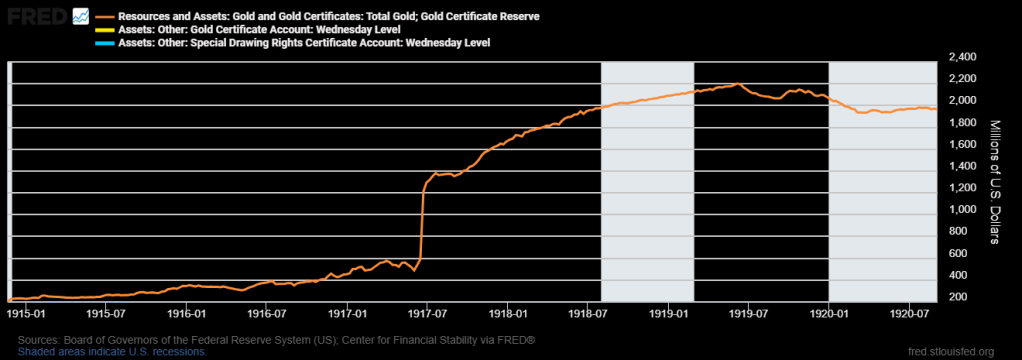
While impressive given its post-war context, the growth that Britain saw could be considered inconsequential, at least when compared to that of the U.S. This is because across the Atlantic, the U.S. more than doubled its own reserves within the same five years. The Federal Reserve was now grappling with the exact opposite problem to the Bank of England, in that its banks were overflowing with European gold. Over the four years of the war, allies sent gold to pay for exports of weapons and other essentials in order to maintain their credit, putting mounting pressure on the young Federal Reserve as inflation threatened the country. However, the influx of gold also bolstered international confidence in the U.S. dollar, prompting many traders to move away from the once-dominant pound. In addition, as other European nations depleted their own reserves to fund the war, their currencies – the German Goldmark, the French Franc, the Italian Lira – all fell in prestige, further strengthening the dollar’s global standing.
The weakening of other currencies, combined with the new economic influence the United States now commanded, meant that the U.S. dollar was now truly a global currency. The pound was still used in trade and held in many banks across the globe, but the dollar, and by extension the United States as a whole, had now emerged as a challenger to the century of British hegemony. Though it was itself a terrible tragedy, World War I also marked the dawn of a new era: the rise of a future superpower and the transformation of the U.S. dollar from a primarily domestic currency to a truly global medium of trade.

Under the gold standard, there was little variation to examine within exchange rates. During this period, most prominent and stable currencies were, or soon became, backed by gold. This system allowed foreign exchange (FX) rates to remain fixed, although certain factors, such as the costs of shipping gold or trade imbalances between countries, could cause minor fluctuations. For example, £1 was worth 113.0016 grains of pure gold once the pre-war parity was restored, while $1 was equivalent to around 23.22 grains of pure gold ever since the Gold Standard Act of 1900, making £1 worth $4.8665. Depending on the situation, the practical rate that traders and investors used would fluctuate very slightly, about 1-2%, around that value. In essence, gold acted as the “currency between currencies,” allowing for exchange rates to stabilize as one could easily figure out the rates by comparing the gold quantities each currency was pegged against, instead of allowing them to float freely like currencies today.
In a tragic turn of events, the growing dominance of the United States economy transformed what began as a domestic crisis into a global catastrophe, as the Great Depression became one of, if not the, worst economic disasters in recorded history. This was not to say that previous crises did not have international implications, but rather that with the newfound weight of the American economy, they now carried unprecedented consequences globally. It should also be noted that the causes behind the Great Depression are, unsurprisingly, much too extensive to be fully addressed here. Consequently, the section will focus mainly on the factors within the United States that triggered the disaster, with particular attention to how the disaster was affected by the gold standard at the time.
The Great Crash of 1929 marked the beginning of the decade-long crisis as the New York Stock Exchange collapsed after years of speculative trading and inflated stock prices. Additionally, in an attempt to protect domestic production, the Smoot-Hawley Act was enacted in 1930, raising import duties on agricultural goods, which prompted retaliatory tariffs from countries such as Canada, France, and Great Britain. The resulting trade war signaled the beginning of the Depression worldwide, exemplifying the global repercussions of every action made by the U.S. now. The situation was further exacerbated by thousands of bank failures across the country, causing immense quantities of gold to flow out of the U.S. as people scrambled to redeem their money for gold to hoard or to send abroad. Though not recorded in Table 2, the figures from the original document by the Board of Governors (1943) showed that American gold reserves stagnated at around $3.9-4.2 billion for most of the Depression. In response, the Federal Reserve raised interest rates in order to restrict the money supply from expanding past the limits of the strained gold reserves, an ill-judged move in hindsight as the resulting deflation caused businesses to go bankrupt and unemployment rates to soar, turning a financial panic into a full-blown national crisis.
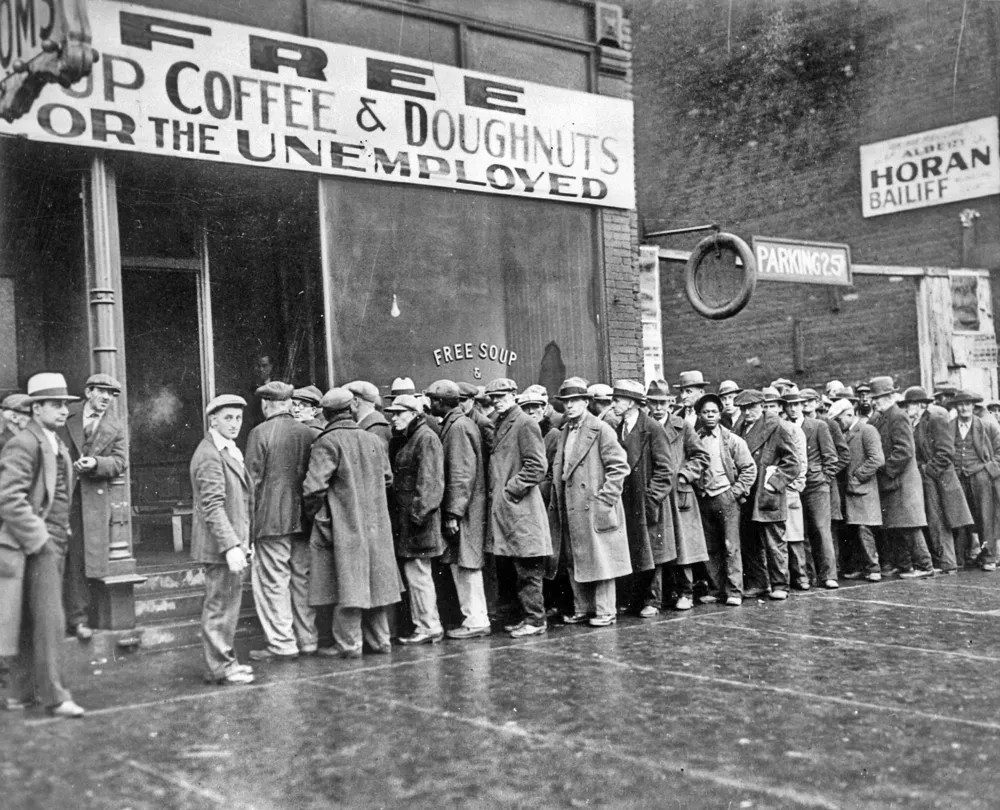
The limits of the gold standard were truly beginning to show in the aftermath of America’s rapid expansion. The constraints it put on the money supply meant that the amount of cash available would never be able to accommodate the increasingly fast-growing economy. To illustrate this point, the nominal GDP of the U.S. by 1929 was about $104.6 billion and would have likely continued to rise if not for the Depression, whereas its gold reserves languished at only around $4 billion. While there is no direct correlation between GDP and gold reserves, the enormous gap highlights the fact that such a rigid monetary system could not support the continuously growing economy. It is a simple fact that as an economy grows, its people will need more money to spend, thus requiring more money to enter circulation. However, under the gold standard, every bill must be supported by an appropriate amount of gold, and thus, only a limited number of bills can be printed. At the pace of U.S. economic growth, the country could not have sustainably maintained the rigid gold standard; if the money supply increased while the gold reserve remained stagnant, hyperinflation would likely have wreaked havoc nationwide.
References:
Angus Maddison, The World Economy: Volume 1, A Millennial Perspective and Volume 2, Historical Statistics, Development Centre Studies (Paris: OECD Publishing, 2006): tables A1-b, A2-b, A3-b, and A4-b, https://doi.org/10.1787/9789264022621-en
Federal Reserve Board. “October 1919,” Federal Reserve Bulletin (October 1919), 955 https://fraser.stlouisfed.org/title/62/item/20594
Harvey E. Fisk, The Inter-Ally Debts: An Analysis of War and Post-War Public Finance, 1914–1923 (New York: Bankers Trust Company, 1924), 154, https://fraser.stlouisfed.org/title/inter-ally-debts-238/.
Banking and Monetary Statistics, 1914–1941, by the Board of Governors of the Federal Reserve System (U.S.), 1943, digitized and accessible on FRASER.
John Osborne, Bank of England 1914–21, vol. 2 (London: Bank of England, 1926), 148-151, https://www.bankofengland.co.uk/-/media/boe/files/archive/ww/boe-1914-1921-vol2-chapter5a.pdf, accessed November 20, 2025.
Winston S. Churchill, “Return to Gold Standard,” The House of Commons Hansard, Volume 183, April 28, 1925, https://hansard.parliament.uk/Commons/1925-04-28/debates/56d3a540-3bf9-4cb0-8da9-1944546ea89a/ReturnToGoldStandard.
 Currency Cornucopia