a currency forged in war
The Civil War, one of the most important events in U.S. History, represents a pivotal moment for the U.S. Dollar. Specifically, the establishment of the greenbacks represent the first appearance of a “modern” dollar.
One of the most important events in the history of the U.S. dollar would be the issuance of “greenbacks” by the United States government in the American Civil War to fund the Union’s efforts. In 1861, the government issued “demand notes” that could be redeemed for gold or silver if the holder requested the government to do so. On February 25th, 1862, the Legal Tender Act was signed by the 37th Congress, which saw the issuance of the United States Notes (also called “greenbacks” due to the green ink used), a completely legal form of payment for any and all debts despite it lacking gold backing, by the U.S. Department of the Treasury. The Act initially authorized the issuance of $150 million in greenbacks, but by 1865, around $450 million had entered circulation. Consequently, the massive money supply made inflation a prevalent issue at the time, yet most people accepted it as a necessity to fund the ongoing war as well as to support the insufficient specie-backed currency system.
The introduction of the “greenbacks” showcased how inadequate the current unsupervised and free banking ecosystem of the United States was. As a result, the National Currency Act was enacted on February 25, 1863, establishing a national banking system by creating the Office of the Comptroller of the Currency (OCC), an independent bureau within the Department of the Treasury. The Office held the responsibility of issuing charters and converting state banks to national banks so long as they met the capital requirements and bought U.S. bonds. These national banking institutions would then distribute National Bank Notes, a sole and stable currency backed by government securities and redeemable for gold at the banks that issued them.
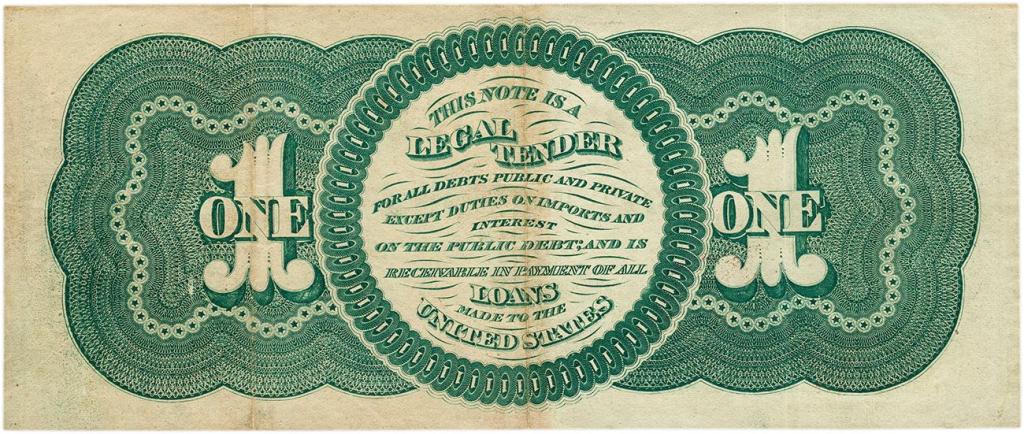
Alongside this was a tax of 2%, later on increased to 10% in 1865, enforced on state bank notes, reducing the amount printed from $263 million in 1863 to a mere $4 million by 1867. The National Banking Act of 1864 further reinforced this by adding specifications regarding taxes, limits of issuance, deposits, and more. As noted in earlier sections, both Acts failed to fully address the underlying issue of a lack of centralization as financial crises continued to persist until 1913. Nevertheless, it did unify the previously fragmented American banknote system as well as create the foundation for a national banking structure.
To this day, the term “greenback” is still used to refer to the U.S. dollar. While the dollar had been the currency of the United States of America for seven decades by this point in time, the introduction of the United States Notes could be considered the unofficial birth of the modern-day dollar. Like the modern dollar, the notes held no intrinsic value, with their value being entirely derived from the trust and faith the people held in the federal government. By the end of the Civil War, the main currencies in circulation were the greenbacks, the National Bank notes, coins, and certificates (documents issued by the U.S. Treasury that could be traded in for gold or silver).
the greenback debate
The issuance of greenbacks sparked fierce debates across America, for at the time, many held distrust in a currency that was backed by nothing but mere faith and trust in the government. The following section describes the long and arduous legal battle for the continued isuance of the greenbacks.
This shift toward a fiat-based currency would spark fierce legal debates, as the very legitimacy of the greenbacks as well as the government’s authority to issue them was put to question in the years following the Civil War. The case of Hepburn v. Griswold, where Mrs. Hepburn tried to settle a debt to one Henry Griswold made before 1862 with the new United States Notes, is one such example. At the time, if an individual was owed a debt, he or she could demand payment in coins as they were the only legal tender. In contrast, the Legal Tender Act produced the United States Notes, a new currency that could also be used to settle debts. When the case between Mrs. Hepburn and Mr. Griswold reached the U.S. Supreme Court, it was ruled that the Legal Tender Act was unconstitutional, with Chief Justice Salmon P. Chase stating that payment with greenbacks was “inconsistent with the spirit of the Constitution; and that it is prohibited by the Constitution.” With a 4-3 vote due to two missing justices, the case concluded in favor of Mr. Griswold. The decision put the legality of the new greenbacks in doubt, as while the Act was considered necessary in funding the Civil War, people wondered whether it was appropriate for Congress to continue printing fiat money during peacetime.
A year later, two cases in Knox v. Lee and Parker v. Davis led to the Court overruling its previous decision. In Knox v. Lee, Mrs. Lee demanded payment in gold from Mr. Knox after her sheep were taken and sold by the Confederates to Mr. Knox. When Mr. Knox’s defense of his buying from the Confederate government was dismissed by the court since the Confederacy was not recognized as a legitimate government, he offered payment in greenbacks to which Mrs. Lee rejected and demanded coins instead. Mrs. Lee’s team then attempted to showcase the difference in value between specie and paper money, which was promptly rejected by the Court which then proceeded to rule in favor of Mr. Knox. In Parker v. Davis (1871), Mr. Parker attempted to fulfill his contract of land to Mr. Davis via greenbacks, who rejected and claimed that he was entitled to payment in coins seeing as the debt itself was made before the act. Again, the Court ruled in favor of Mr. Parker, stating that the notes were completely legal for debts before the Act. Both rulings were made with the addition of two new justices, Justice William Strong and Justice Joseph P. Bradley, both of whom were appointed by President Ulysses S. Grant shortly after Hepburn v. Griswold. With the inclusion of the new justices, the Court proceeded to overrule its previous decision in Hepburn v. Griswold with a vote of 5-4. The greenbacks were now able to settle both debts before and after the Act of Legal Tender.
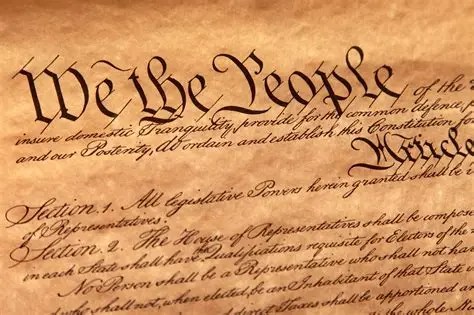
This raises the question: are greenbacks truly constitutional? It must be pointed out that the rulings in Knox v. Lee and Parker v. Davis were both hinged on a “loophole” within the Constitution. Article I, Section 10, Clause 1 states that “no State shall (…) coin Money; emit Bills of Credit; make any Thing but gold and silver Coin a Tender in Payment of Debts; (…).” While states could not make anything but coins legal tender, there is no explicit mention of the federal government being prohibited from doing the same. Since the Constitution did not expressly forbid it, Congress had complete authority to issue greenbacks and make them legal tender. On this technicality, the Legal Tender Act would be completely constitutional whether it was wartime or not, something often brought up by critics who saw the Act as a necessity during the conflict but excessive in times of peace. If the ruling in Hepburn v. Griswold had been upheld, then the very existence of the U.S. dollar today, as well as the abolishment of the gold standard domestically in 1933 and internationally in 1971, would also be considered unconstitutional.

In 1875, the Resumption Act was signed, which put the greenbacks back onto the bimetallic standard and allowed for greenbacks to be redeemed for gold. The Greenback Party, a political party that supported paper money and monetary policies that benefited the common people, strongly opposed the enforcement of the Act due to their belief that “soft money” was vital for supporting the working class. In practice, the Act required a substantial gold reserve, seeing as two years earlier, silver was effectively removed from the economy, a topic that will later be discussed in further detail. Nonetheless, it managed to restore confidence in the currency, curb inflation rates, and make greenbacks a recognized currency in the U.S.
References:
Legal Tender Act, ch. 33, 12 Stat. 345 (1862)
Britannica Editors. “Greenback movement.” Encyclopedia Britannica, July 17, 2023. https://www.britannica.com/event/Greenback-movement.
National Currency Act, ch. 58, 12 Stat. 665 (1863)
Federal Reserve History, “National Banking Acts of 1863 and 1864,” July 31, 2022, accessed October 20, 2025, https://www.federalreservehistory.org/essays/national-banking-acts
Coinage Act of 1834, ch. 95, 4 Stat. 699 (1834)
National Banking Act, ch. 106, 13 Stat. 99 (1864)
Hepburn v. Griswold, 75 U.S. 603, 625 (1869), https://www.loc.gov/item/usrep075603/
Legal Tender Cases (Knox v. Lee; Parker v. Davis), 79 U.S. 457 (1871), https://www.loc.gov/item/usrep075603/
U.S. Const. art. I, § 10, cl. 1
Resumption Act, ch. 18, 18 Stat. 296 (1875)
 Currency Cornucopia